
What Now?
Take a deep breath Maine donkeys. Key big picture dynamics in the Senate race remain unchanged, though Democrats can still do what they do best and blow it.

On Sunday July 5th, my daughter and I drove south to a section of Midcoast Maine with a robust lobster fishing history and all of the familiar economic tensions that exist between the seasonal tourists and homeowners who pour in from away and the working waterfront and multigenerational families scratching out a living year round. I hoped to spend a few hours recording interviews with Maine voters a day after America’s 250th birthday and nearly a month after the primary victory of an improbable Democratic candidate for U.S. Senate, who ignited a movement and appeared poised to give Republican incumbent Susan Collins the toughest reelection fight of her political life even as he pulled a wheelbarrow of accumulating personal baggage.
Finding good storytellers doesn’t just happen. It’s an unpredictable process. Sometimes you work your networks, get referrals, have a background chat on the phone, and if all goes well, set up an in-person interview. It’s also fun, and sometimes necessary depending on the nature of the story and the deadline, to try a more random approach. Head to some small-town outpost, meet some folks and try—in a short period of time—to establish enough rapport to instill the trust needed to get someone comfortable with the idea of opening up in front of a live microphone. When it comes together, it’s an awesome feeling. But striking out, as happened to me on Sunday, can be a blessing in disguise when the news cycle suddenly shifts in a different direction and takes off like a rocket.
On Monday, instead of mixing a new podcast episode, I spent the afternoon and early evening hours monitoring coverage of the latest dark turn in the exhumation of Graham Platner’s behavior in his previous dating relationships.
When operatives aligned with the more progressive grassroots wing of the Democratic Party plucked Platner from obscurity last summer, and convinced him to run for U.S. Senate, the candidate also became a lead combatant in the brutal civil war consuming the party since Hillary Clinton vanquished Bernie Sanders in 2016. Powerful financial and media forces are engaged on both sides of this internecine and seemingly endless struggle for the party’s future. In Maine, the corporate friendly wing of the party found its establishment proxy warrior in Janet Mills, who never seemed all that thrilled to be either running for Senate or playing the role of pawn on the DNC/DSCC chessboard.
Graham Platner built a powerful grassroots movement in Maine over the past year.
I saw just a bit of it up close.
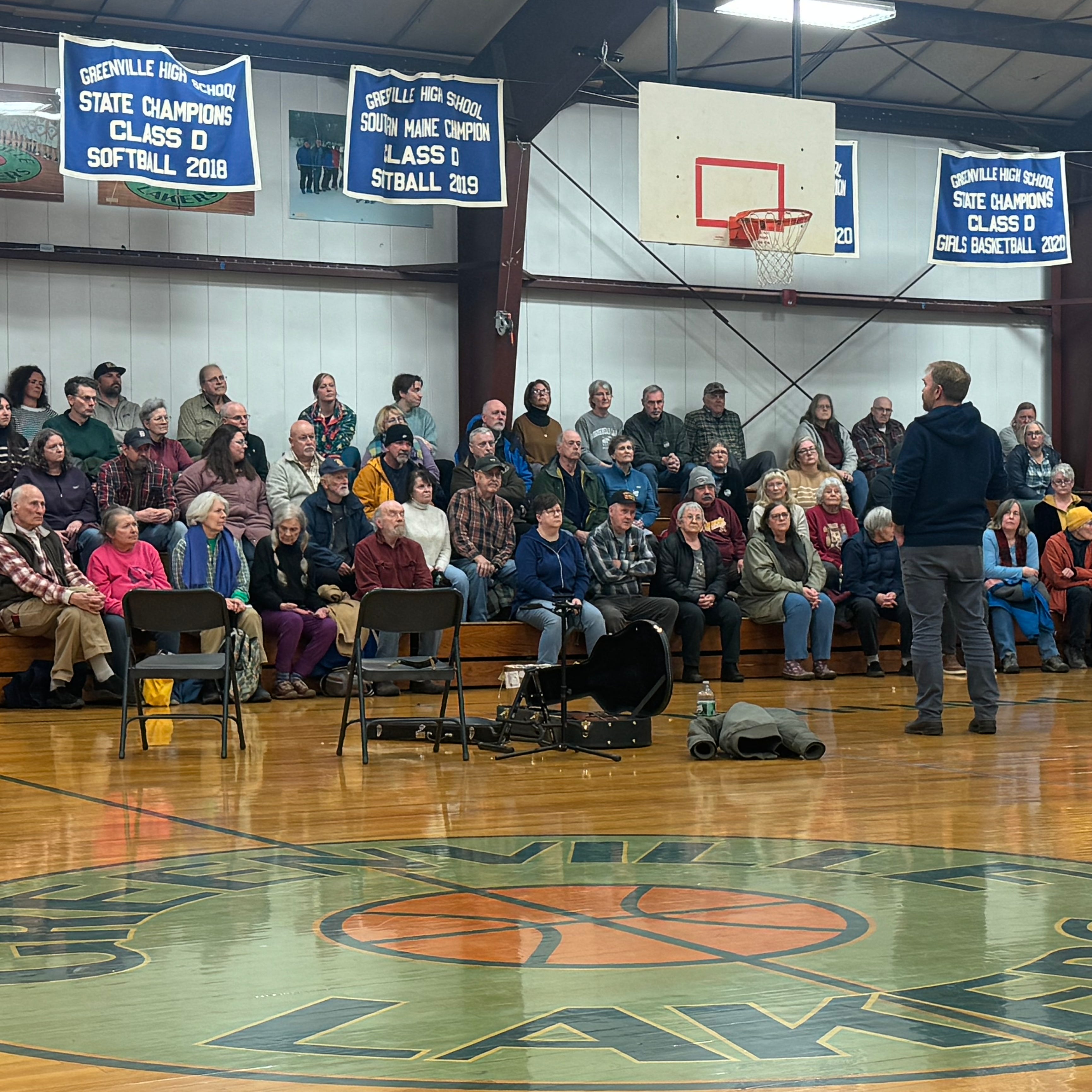
It was impressive—the type of “movement politics” required to defeat a well-known, well-funded incumbent with a well-established brand and history of getting reelected.
Platner’s campaign is now over.
He suspended operations Wednesday night, though he still needs to file paperwork with the Maine Secretary of State to officially withdraw. A source with his campaign reportedly told Axios he will do so on Monday July 13th before the 5PM deadline.
Platner’s campaign ended because he faced a credible detailed allegation of forcing himself on a woman and raping her as she repeatedly told him no. It did not end, as he asserts in his video statement, solely due to the powerful forces aligned against his candidacy.
So what now?
Before sharing some thoughts, I want to say something and say it clearly.
Sexual assault and abuse remain an epidemic of staggering proportions in our society.
Do people make false allegations? Sometimes, yes. But I believe we have a moral duty as partners, parents, friends, neighbors and humans to support and believe all survivors who summon the courage to share credible stories of abuse and victimization.
Before diving into where Maine Democrats go from here, I want to step back and look at a few key election year dynamics.
In late June, The New York Times released a poll on the Maine Senate race in partnership with the Siena Research Institute and the Portland Press Herald. NYT/Siena polling during 2024 was among the most reliable surveying available during the cycle. The Maine U.S. Senate poll featured richly detailed cross-tabs that dove deeply into the strengths and weaknesses of Graham Platner and Susan Collins.
This gallery (click through below) features some of the poll’s key topline findings on the especially challenging political environment facing the incumbent.


The demise of the Platner campaign has likely done little to alter these topline dynamics. President Trump’s overall approval rating is underwater. A majority of voters disapprove of his handling of the economy, the Iran War and other key issues and favor electing a Democratic Congress to check the president’s maximalist approach to executive power. An analysis by Nate Cohn, The Times chief political analyst, laid out why the Democrats might ultimately be better off if Platner withdrew.
Over the last decade, all the great electoral over-performers have watched the nation’s polarizing politics gradually pull their standing back to earth and drag congressional election results into closer alignment with presidential results. This is even true for Ms. Collins: Her nine-point victory in 2020, while impressive, was her smallest re-election margin. There’s every indication that her support has continued to erode over the last six years. A majority of likely voters said they had an unfavorable view of her in the latest Times/Siena poll. That would not usually be enough for a Republican to win a Democratic-leaning state.
And while Ms. Collins may no longer be a political juggernaut, she was very well suited to capitalize on the liabilities of a candidate like Mr. Platner. She was not loved, but she was broadly acceptable, according to our polling: She was viewed as moderate, moral, experienced and effective by clear majorities of voters. She may have been a particularly good fit for women and especially older women, who may have been repelled by Mr. Platner’s conduct. Women 65 and over backed Ms. Collins by three points in the Times/Siena poll, even though those same respondents, when asked how they voted in 2024, collectively backed Kamala Harris by 28 points.
Why Democrats Would Probably Come Out Ahead if Platner Dropped Out, The New York Times, July 8, 2026
Once Platner files the official withdrawal paperwork, the party has until July 27th to select a replacement. With Platner’s downfall still fresh, the unfolding process to replace him is creating a perfect storm of deja Vu and PTSD for Democrats in Maine, Washington D.C. and beyond. The upheaval comes almost two years to the day after President Joe Biden withdrew from the 2024 presidential campaign. Kamala Harris’s consolidation of support—at the expense of a more open and competitive, albeit truncated, process—saddled the candidate and the party with insurmountable baggage in an already brutal electoral environment. Now, Democrats face a similar quandary in another consequential race with the potential to alter the balance of power in Washington.
On Wednesday, the Maine Democratic Party released the following statement on the process to select a new nominee.
Today, the Maine Democratic Party held a meeting with over 100 state committee members who voted to hold a nominating convention to choose a new nominee if there is a vacancy to fill. We will announce the full timeline, details for how the nomination process will move forward, information about how to participate, and requirements for candidates soon. We will keep the public informed throughout the process – transparency is of the utmost importance.
There is an unprecedented amount of energy and enthusiasm among Maine Democrats, driven in part by many of the dedicated volunteers and supporters who were inspired by Graham Platner’s campaign. We look forward to coming together and harnessing that energy around our new nominee as we work to defeat Susan Collins in November.
Charlie Dingman, MDP Chair, Imke Schessler, MDP Vice Chair, Devon Murphy-Anderson, Executive Director
Late yesterday, the party outlined the rules candidates must follow and the deadlines they need to hit to qualify for the ballot.
Declared candidates are already off and running. They include recent Democratic gubernatorial candidates Troy Jackson, Shenna Bellows and Nirav Shah; David Costello, who came in third in the June primary; recent 2nd Congressional District candidates Jordan Wood and Paige Loud; Maine State Representative Valli Geiger; Andrea LaFlamme; and Dan Kleban, owner of Maine Beer Company in Freeport, who briefly entered the race last year before withdrawing.
Jackson, Shah and Bellows, who finished behind Hannah Pingree and within striking distance of each other, are all battle tested candidates. In theory, arguments can be made that all three have the political skills to seize the moment offered by the political environment and prosecute a persuasive case against Susan Collins.
In June, Platner’s base of grassroots supporters powered the candidate to the largest margin of victory in a primary for any Democratic U.S. Senate candidate in the state’s history. It was a movement built on the candidate’s rough around the edges charisma, his take no prisoners oratory and a policy agenda fueled by the wide schism between the progressive left—and a party establishment it views as bought and sold by the same big money forces (read: millionaires and billionaires) that now enjoy unprecedented power and influence under Trump 2.0.
Platner’s downfall has left his supporters crestfallen and enraged at the candidate, the Democratic establishment in Maine and Washington D.C, or both.
Whomever emerges in the race to replace Platner needs the fully bought-in energy of his base to have a chance of winning in the fall. That will require a lot of listening and much fence mending in a short period of time.
Unfortunately, thus far, Platner himself seems unwilling or unable to aid in this process. Politics, at its worst, can be a brutal transactional business. A hall of mirrors—filled with manipulations, fantasies of omnipotence and ghosts. One day you’re on a stage with Bernie or Senator Warren, in front of thousands, fighting the oligarchy. The next you’re on your back porch in the midafternoon sun, the noise of traffic in the background, recording a shaky withdrawal video on your mobile phone.
Platner’s advisers reportedly advised him to be conciliatory in his withdrawal video.
Come along with me for a moment and imagine if Platner had said something along the lines of:
Hi everyone. It’s been a difficult few days for me personally and for the movement we’ve built. I’m here tonight to share with you that I’ve decided to suspend my campaign for the United States Senate. There are many things I could say about the circumstances that led to this decision, but I firmly believe now is not the time for that.
This campaign, this movement we’ve built together, is so much larger and more powerful than any single individual, myself included. A month ago, Mainers raised their voices loudly and clearly, demanding change. That powerful reality has not changed. While I will no longer be the candidate, we have an election this fall that we must go out and win.
The Maine Democratic Party has committed to running an open transparent process to select my replacement. We have some great candidates stepping up. Ask them tough questions and listen to the answers they give. The right person to pick up the mantle will emerge.
It’s been the honor of my life to work beside you to build this movement. We Democrats are known for our fierce debates, and yes, disagreements with each other. Our vision of what it will take to create a more just economic system may be different than others in our party. But on the highest and most important priority in this election, there is no disagreement. We must defeat Susan Collins and do our part to elect a Democratic Senate. We can no longer afford to have a U.S. Senator who won’t provide a check on the enormous power being wielded by an incompetent and corrupt administration more concerned with ballrooms, arches, reflecting pools and lining its members pockets than with your family’s economic future and daily struggles to make ends meet.
I want to end by apologizing to those I’ve let down. I only hope you can take your incredible commitment and passion, and yes your anger and frustration, and unite behind my replacement and go win this election.
Platner, of course, said nothing of the sort. Whether he’s able to play a more positive role going forward remains to be seen.
The candidates vying to replace him face their own set of tough challenges.
Republican PACs supporting Collins are already pummeling Democrats who stood shoulder to shoulder with Platner as the primary reached its crescendo.
Whoever emerges as the nominee must find a way to keep Platner’s baggage at arm’s length, while simultaneously reenergizing his base around the idea that the best way to keep his movement and ideas alive is for Maine Democrats to come together and do their part to turn the Senate blue.
What now, indeed. Thanks for this insightful analysis and framing.